
A Sky Reclaimed:
The Revival of Britain's Golden Eagles.
This is an Auria Key Cause.
February 1, 2026
The Golden Eagle, a symbol of raw wilderness and powerful grace, is globally secure on the IUCN Red List—but within Britain’s shores, they linger precariously as a rare and treasured presence, clinging fiercely to survival in isolated corners of the Scottish Highlands.
This story supports an Auria Key Cause — a real project receiving direct donations, made possible through our unique member support.
Once, the skies above Britain, high above mountains and moors, Golden Eagles soared effortlessly on currents of air, their shadows moving silently over ancient forests and vast stretches of heather. Kings and Queens of the air, their gaze sharp and precise, Golden Eagles quietly maintained nature’s order, their very existence shaping the delicate balance of Britain’s ecosystems.
Over centuries, this intricate tapestry frayed. Human expansion, persecution, habitat destruction, and misunderstanding drove these magnificent creatures from their territories, pushing them to the edge of disappearance. By the twentieth century, their numbers had dwindled dramatically, their remaining strongholds limited to remote parts of the Highlands.
Yet, even as hope dimmed, something remarkable began stirring beneath those empty skies—a quiet resolve to restore what had been lost.
The story of the Golden Eagle’s revival is not a tale of overnight success. Rather, it is a testament to the power of patience, meticulous care, and profound collaboration. It began with a network of visionaries—scientists, conservationists, land managers, and local communities—united by the shared goal of bringing these iconic predators home.
Central to this vision was the recognition that Golden Eagles are crucial ecosystem engineers. Without them, deer populations explode, decimating young woodland and destabilising habitats for countless other species. Without them, smaller predators multiply unchecked, unsettling the delicate equilibrium of Britain’s wildlife. Returning the Golden Eagles is therefore more than symbolic—it is vital.

With care and science, the South of Scotland Golden Eagle Project leads restoration.
In the rolling hills of southern Scotland, the South of Scotland Golden Eagle Project has transformed hope into reality. Young eagles, carefully selected from thriving Highland populations, have been gently reintroduced into landscapes thoughtfully prepared to sustain them. Each eagle released carries with it the promise of renewal—not only of their species, but of the rich ecological tapestry they once quietly governed.
This reintroduction process is painstaking and deliberate. Rigorous scientific methods guide every step, from genetic testing to ensure robust diversity, to detailed monitoring of habitat health and prey availability. Crucially, it’s about fostering strong relationships with local communities, who must become custodians of these returning giants.
Already, these efforts bear early fruits. Eagles released into carefully chosen habitats are forming territories, bonding in pairs, and even beginning to breed. These sightings, each one met with excitement and pride, symbolise ecological recovery and a cultural rebirth.
The human dimension of the eagle’s return is perhaps the most transformative. Communities once apprehensive about reintroducing an apex predator are now the eagle’s most passionate advocates. Educational programmes have taken root, igniting curiosity among local youth who now gaze upward not in fear, but in wonder and respect. Farmers and landowners, traditionally wary of predators, have come to appreciate the benefits of balanced ecosystems and the potential economic uplift from wildlife tourism.
This shift is deeply emotional, reconnecting people to the wildness of their landscapes. Communities that once viewed wildlife primarily as a challenge now celebrate its presence as a cherished aspect of their heritage. Local festivals, art projects, and storytelling sessions all echo the eagle’s return, weaving it back deeply into the cultural fabric.
Golden Eagles are not heavy-handed dominators of their habitats; rather, they exert a quiet, stabilising influence. Their presence alone encourages prey populations to diversify, deer patterns to adapt, and habitats to regain lost resilience. Each eagle acts like a gentle conductor, subtly orchestrating a symphony of ecological renewal.
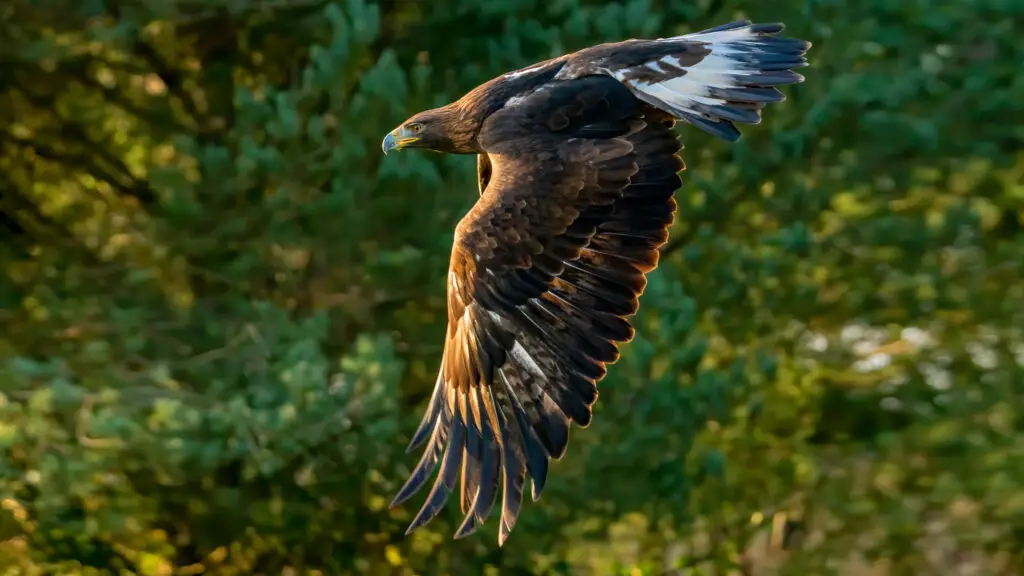
A symbol of wild Britain, returning through patience, science, and trust.
Yet, significant challenges persist. Illegal persecution, though diminishing, remains a threat, requiring vigilance and collective resolve. Renewable energy projects must balance clean power goals with the careful siting of turbines to protect eagle flight paths. Land-use conflicts must be managed through continual dialogue, empathy, and mutual respect.
But these challenges, significant as they are, pale next to the potential gains. The ongoing revival of Golden Eagles across Britain offers proof that humans can correct past mistakes—that with intention and cooperation, it’s possible to heal the landscapes we’ve harmed.
In the northern hills near Cairngorms National Park, I meet with Anna, a conservation scientist deeply involved in eagle monitoring. As she sets up her spotting scope, her passion is unmistakable.
“Each eagle returning is a small miracle,” Anna shares, her eyes sparkling with enthusiasm. “It’s like watching nature reclaim its rightful place in our world. When an eagle chooses to stay, to hunt, to build a nest—it’s nature giving us another chance. It’s incredibly humbling.”
Nearby, local guide James shares a similar sentiment. Born and raised in the region, he has witnessed first-hand the transformation that eagles have sparked.
“Ten years ago, this valley felt different—emptier somehow,” James recalls. “Now, there’s a sense of pride. Visitors come here specifically to see these magnificent birds. It is about tourism, but also reconnecting people with what matters—nature and community.”
James and Anna represent a new generation of stewards who recognise that their relationship with the landscape is reciprocal. They understand that true stewardship is less about controlling nature and more about creating the conditions for it to thrive.
In Britain today, the Golden Eagle’s revival signifies more than ecological restoration. It symbolises a profound shift in how humans perceive their place within the natural world. It’s an acceptance of coexistence, a recognition that wildness and human well-being are intricately intertwined. The eagle’s return reminds us that our landscapes are not solely for human convenience, but spaces we must respectfully share with other forms of life.
Standing on a windswept hillside, watching a Golden Eagle glide effortlessly above the valley below, it’s easy to understand why these birds hold such deep emotional resonance. They are living symbols of possibility, resilience, and restoration.
They remind us of our capacity to mend what we've damaged, to build alliances rather than divisions, and to reclaim a shared sense of responsibility toward the wild.
As Britain continues to reclaim its skies for Golden Eagles, the story unfolding is one of hope, courage, and collective commitment. Each eagle soaring overhead is a living testament to the power of collaboration and the enduring strength of nature itself.
In the returning presence of Golden Eagles, we find inspiration not only for ecological recovery but for our own relationship with the world around us. Their revival is proof that given the chance, nature rebounds, bringing with it lessons in humility, awe, and coexistence—lessons that may prove as valuable for humanity as they are vital for nature.
From the Auria Foundation
If you believe in the importance of strengthening what remains and restoring what has been lost, then you understand the significance of the Golden Eagle’s return.
At Auria, we choose partnership over possession, stewardship over exploitation, guardianship over neglect. If this resonates with you, join us.
Support the Golden Eagle’s return. Be part of a legacy that actively chooses to rebuild, restore, and reconnect.
Subscribe to the Auria Field Journal for more powerful stories of ecological renewal.